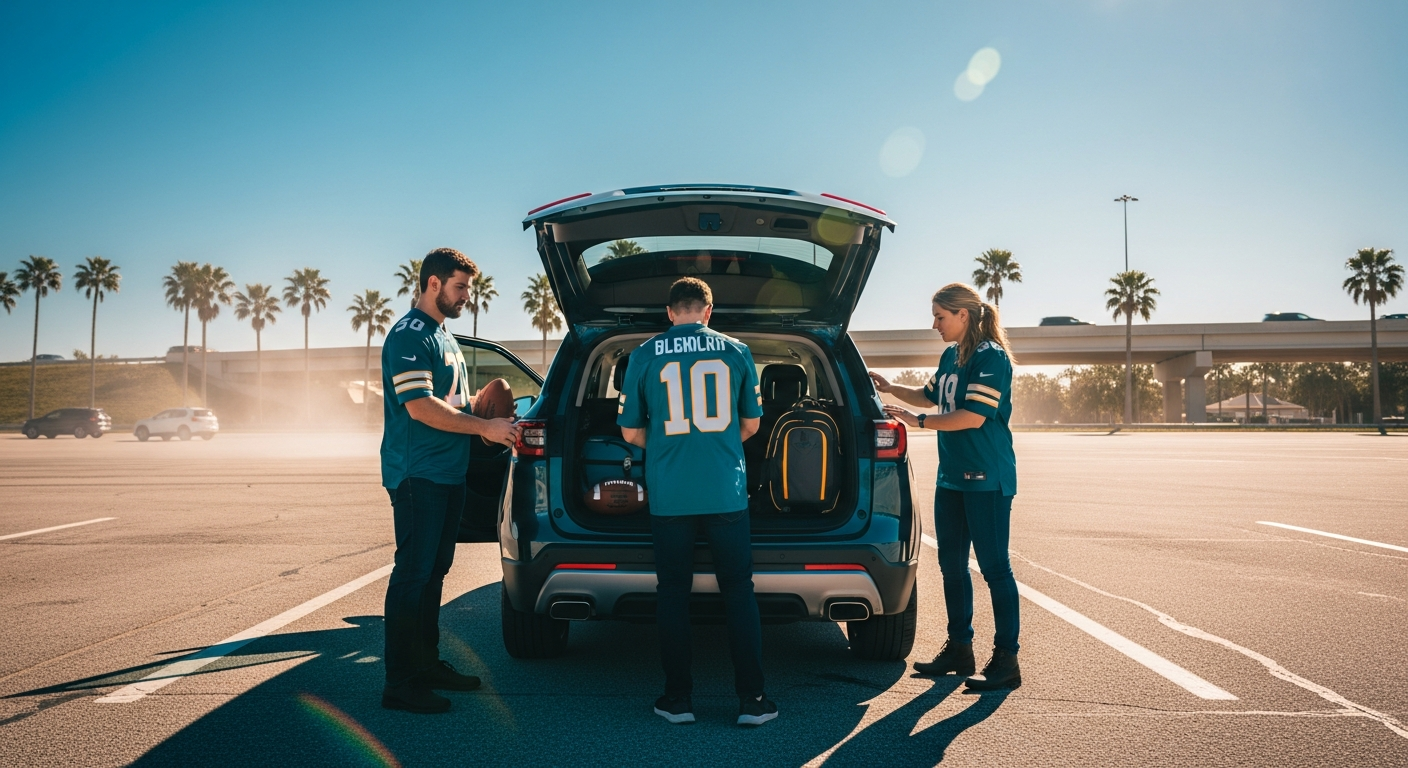
When the Jacksonville Jaguars hit the road for away games in Tampa or Miami, the Duval faithful show up in force. Opposing stadiums turn into seas of teal, complete with face paint, noise, and all the energy that defines Sunday football in the Sunshine State. But while the tailgate game is always on point, the actual drive to those stadium parking lots is getting more dangerous by the year.
It’s a topic dominating local sports radio right now, and fans are genuinely asking: are you ready for the 2026 travel season? Between unpredictable weather and jammed interstate corridors, getting to the game safely takes just as much planning as the matchup itself.
Florida’s Highway Reality Check
The 2026 Traffic Picture
Anyone who’s driven I-95 or braved the chaos of I-4 to reach Central or South Florida stadiums knows the deal. Rainy conditions and reckless driving have already made this a brutal year on the roads, with Duval County’s 60th traffic fatality of 2026 already on the books.
And it’s not just weather. A growing wave of inattentive motorists who can’t seem to put down their phones is making every highway stretch more hazardous. Despite the 2019 hands-free law, distracted driving remains a threat across the Jacksonville area. JSO recently issued over 160 citations for texting and driving, a problem fueled by gig workers multitasking and commuters scrolling social media at 70 mph. You’ve got to treat the highway like a hostile environment before you even reach enemy territory.
Beating Traffic and Navigating Routes
The Early Arrival Strategy
Winning the commute takes solid clock management. If you pull out of the driveway assuming a standard two-hour drive will cut it, you’re already setting yourself up for a pre-game defeat. Anticipating bottlenecks and staying physically prepared for the Central Florida heat aren’t optional; they’re survival basics for any away-game road trip.
Think of your travel plan like a coaching staff scripting their opening drive. Here are a few strategies worth building into your game-day routine:
Secure parking early: Use secondary parking apps to grab lots farther from the main stadium exits. You’ll dodge the worst bottlenecks on the way out.
Follow the first-quarter hydration rule: Midday Florida heat on exposed asphalt is no joke. Alternate water with adult beverages during the early tailgate hours, or you’ll feel it by the third quarter.
Monitor live route conditions: Keep navigation apps running the entire drive to dodge sudden backups, lane closures, or surprise construction delays.
Prep the vehicle: Check tires, brakes, and engine fluids before you leave. Highway breakdowns are on the rise across the state, and the shoulder of I-4 is the last place you want to spend a Sunday morning.
Congestion Chokepoints
Highway delays can turn a smooth cruise into a parking lot in minutes. A major I-295 crash near Duclay recently trapped drivers for hours. Fatal multi-car collisions near Wilson Blvd have shut down heavily traveled southbound lanes entirely. Even brush fires off I-95 North can drop visibility to zero without warning.
Know your route’s specific hazards before you hit the road. Here’s a quick breakdown of what to expect on game day:
The drive home after a heartbreaking loss (or even a thrilling divisional win) is arguably the most dangerous part of your entire Sunday. Exhausted fans, aggressive drivers, and crowded stadium exits create a recipe for serious collisions along the busiest corridors.
So what happens if you get rear-ended by a distracted driver while sitting in bumper-to-bumper traffic? Florida operates on a no-fault insurance system, meaning drivers must tap their Personal Injury Protection (PIP) coverage first to handle immediate medical bills. But to file a lawsuit for more extensive damages, you’ll need to meet the serious injury threshold in Orlando. Under state law, that means proving permanent injury, massive loss of a bodily function, or severe scarring and disfigurement. Minor fender-bender complaints won’t qualify; the physical and financial damage has to be thoroughly documented.
Is Florida’s PIP Insurance Enough?
The True Cost of a Collision
Some fans assume that because Florida requires all drivers to carry PIP insurance, they don’t need to stress about the financial fallout from a wreck. However, the average cost of non-fatal injuries in Florida car accidents is about $29,000 per incident, often exceeding standard PIP insurance coverage limits.
PIP typically covers up to $10,000—much less than the average $29,000 cost of non-fatal injuries in Florida crashes. Lost wages and premium increases quickly add up, creating lasting financial strain.
The Final Whistle on Florida Travel
So, are Jaguars fans truly ready for what’s coming in 2026? Throwing on the jersey and loading the cooler isn’t enough anymore. Away-game travel demands route intelligence, defensive driving against distracted motorists, and a vehicle that’s actually road-ready.
So before the next big away game, make your plan, check your route and vehicle, and know your insurance rights. Don’t let chaos on Florida highways catch you off guard—commit now to safe, smart travel and help ensure every Jaguar fan makes it home after the game. Safe travels, Duval. Go bring home a win.
Why Pickleball Keeps Showing Up in Pro Athlete Offseasons Pickleball has this rap of being the sport for suburban dads and retired schoolteachers. That’s by no means a bad thing, but you wouldn’t expect NFL pros to give it a shot as part of their training, right? The thing is, that’s exactly what’s happening, and when you look into it, it makes total sense. Pickleball is cute and trendy, but it has so much more to offer than just that. […]
How Jacksonville Sports Fans Spend Their Downtime Online For a station that has spent decades tracking every snap of Jaguars football and every inning of Gators baseball, 1010XL knows better than most that sports fandom does not stop when the broadcast ends. Listeners tune in for pregame breakdowns, stick […]
Weather, Turf, and Travel: The Hidden Factors That Shape NFL Betting Lines Every point spread you see reflects far more than talent, and the sharpest handicappers know it. Beyond rosters, coaching, and momentum, a quiet set of environmental factors nudges betting lines in ways that casual fans rarely notice. These […]