Why Do Professional Athletes Need Attorneys?
Why Do Professional Athletes Need Attorneys? Photo by RUN 4 FFWPU on Pexels Professional athletes […]

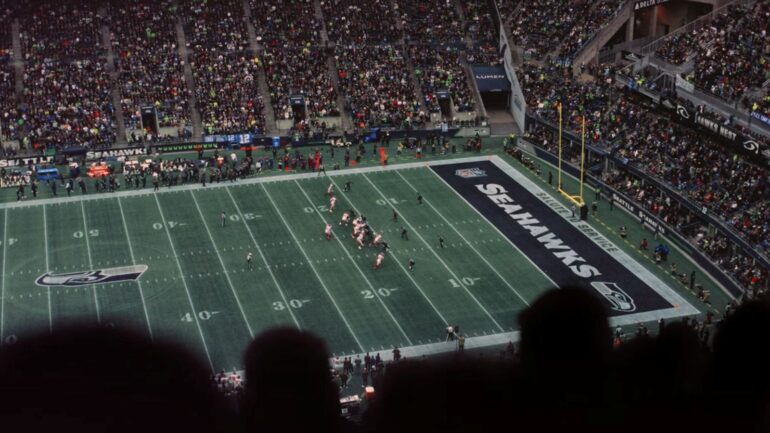
There’s something about American football that refuses to stay inside the stadium. The bone-crunching collisions, the tactical chess match between coaches, the visual spectacle of 70,000 fans draped in team colors under stadium lights. It bleeds into culture in ways people don’t always stop to notice. And one of the most fascinating places it shows up is in art and design.
NFL team identities are some of the most recognizable branding in the world. Every logo, every color combination, every helmet stripe pattern represents a deliberate creative decision that fans then carry with them for life. The Dallas Cowboys’ star. The Chicago Bears’ blocky wordmark. The Oakland Raiders’ whole visual attitude. These aren’t just sports logos. They’re cultural symbols with genuine emotional weight.
The NFL’s Artist Replay initiative has pushed this even further, amplifying BIPOC artists who create original work inspired by game moments, players, and the raw drama of the sport itself. Artists working in this space describe finding something almost uniquely cinematic in football. The tension of a fourth-down conversion, a quarterback scanning the field, the geometry of receivers cutting across zones. It’s visual storytelling before any artist even picks up a brush.
The Creative Energy Nobody Expected
Here’s what’s interesting. American football gives designers and illustrators something other sports rarely offer in the same dose: controlled chaos. Every play is a designed set piece that explodes into something unpredictable. That tension, between structure and spontaneity, is exactly the kind of thing creative people feed on.
That same balance between structure and unpredictability also shapes modern digital experiences. Platforms built around community interaction and strategic play, such as BigPirate, reflect a similar dynamic. By combining competition, social engagement, and accessible gameplay, they mirror the collaborative and creative energy that makes sports culture so visually and emotionally compelling.
Back on the design side, the NFL’s approach to visual identity has grown more sophisticated every year. When the Super Bowl LX logo dropped for the 2026 game, it immediately sparked conversations not just about aesthetics but about meaning, with fans projecting stories, rivalries, and narratives onto a single graphic. That’s what great design does. It becomes a container for emotion.
The Super Bowl as a Creative Brief
No other single event in American sports generates the kind of design output the Super Bowl does. Logos, halftime stage sets, broadcast graphics, merchandise, experiential activations. The whole thing is essentially a massive creative brief that hundreds of designers, artists, and directors execute simultaneously every year.
For Super Bowl LIX in New Orleans, the NFL made history by commissioning Tahj Williams, a 26-year-old queen of the Golden Eagles Mardi Gras Indians, to create the official logo and theme art. Williams hand-sewed beads in colors rooted in Black Masking Indian tradition to produce something genuinely one-of-a-kind. The result wasn’t just a logo. It was a cultural statement that appeared on digital tickets, the official program, and the exterior of a major hotel.
The NFL said they wanted to amplify local New Orleans culture, and Williams’ deep connection to her community made her the right person for the project. That decision, choosing a community artist over a design agency, says a lot about where sports branding is heading.
Why This Connection Runs So Deep
American football and visual creativity share more DNA than most people realize. Both operate on rhythm and timing. Both reward bold decision-making. Both have an audience that is deeply emotionally invested in the outcome. A graphic designer working on a team rebrand and an offensive coordinator drawing up a new play formation are, in a strange way, solving the same kind of problem. How do you communicate something complex and make it feel immediate?
The Super Bowl has grown from a purely sporting event into a full visual spectacle, with halftime shows, high-budget commercials, and iconic branding that stays in people’s memories for decades. Designers have become as important to that experience as the athletes.
And for artists, the sport remains an endlessly rich subject. The physical drama alone is enough. But it’s also the culture around it, the tailgates, the fan communities, the generational loyalty, that gives American football its real creative gravity. You can’t fake that kind of material. It’s all already there, waiting to be turned into something.
Why Do Professional Athletes Need Attorneys? Photo by RUN 4 FFWPU on Pexels Professional athletes […]