Why is basketball gaining popularity around the world faster than American football, and what is behind this phenomenon
todayDecember 18, 2025
Why is basketball gaining popularity around the world faster than American football, and what is behind this phenomenon
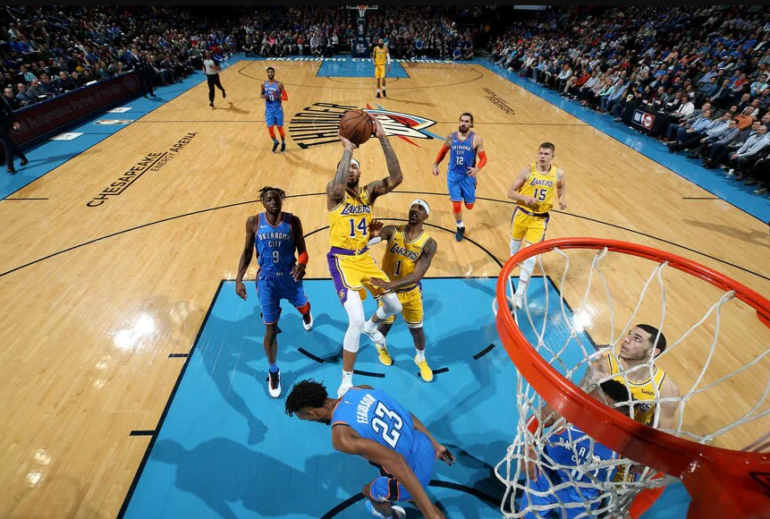
Basketball and American football were both born in the USA and became symbols of national sports. However, only basketball managed to turn into a truly global phenomenon, capturing millions of fans on every continent. What prevents legendary American football from spreading beyond its home country, and why has basketball become closer to people in so many different nations? Historical facts, cultural differences, and modern globalization processes will help us understand this.
How the world chooses between basketball and football
According to the latest Statista polls, 79% of American fans follow American football, while 65% prefer basketball. This confirms the dominance of football in America itself, but outside its borders, the situation changes. According to international rankings such as the Global Sports Market Report, basketball consistently ranks among the top three most recognizable sports in the world, second only to soccer. At the same time, American football does not even make the top ten in popularity in Europe, Asia, and Latin America. Although statistics are accurate for specific regions, they do not always take into account unofficial leagues and local specifics, but the overall trend is clear.
Why sports destinies differ so much historically
American football began in the collegiate environment of the USA in 1869, when the teams of Princeton and Rutgers played a match according to rules that combined elements of rugby and soccer. Over time, this experiment grew into the National Football League (NFL), officially created in 1922 and turned into a commercial phenomenon. Basketball appeared later—in 1891, when Canadian educator James Naismith developed a simple and safe game for indoor gym activities in winter. The NBA emerged almost half a century later, becoming not only a sports but also a cultural icon.
Historical circumstances played a key role. While American football developed mainly within the country and required complex organization, basketball spread through schools, armies, and the Olympic Games, quickly taking root in new countries. Basketball’s Olympic debut in 1936 became a turning point for its globalization.
Why some traditions are stronger than others
American football is deeply embedded in American identity, but outside the USA it faces a cold reception. According to coach Russ Mann, “in Europe and Asia, people from early childhood are surrounded by the atmosphere of big football.” The habit of supporting a local club and the sense of unity around football become a barrier for other sports traditions. In America, according to basketball coach Don Carlisle, spectator loyalty is more changeable and often depends on the success of a particular team.
Such differences shape a special sports culture. For millions of Europeans or Asians, the game with an oval ball seems alien, while basketball, with its simple rules, easily fits into school programs and street competitions. Even the status of championships and holidays, such as the Super Bowl in the USA or the Champions League in Europe, differ in the depth of cultural involvement.
The role of media and globalization in making sports “viral”
The most important driving force behind basketball’s global popularity is modern media and digital platforms. The NBA, as early as the late 20th century, signed agreements for foreign broadcasting, and the internet and social networks made it possible to broadcast games and highlights without geographical barriers. Young people all over the world watch short clips of slam dunks and dancing fans, instantly becoming fans of new heroes.
The digital environment shapes not only the ways of watching games but also how fans interact with the sport outside of broadcasts. Increasingly, interest in the game is maintained through specialized online resources and services.
Against this background, websites appear that collect information about sports events, analytics, and related online activity formats. Numerous betting companies make a huge contribution to the growth of basketball’s popularity due to the strong element of excitement.
On themed sections of Reddit, one fan shared that on the site www.twinspinca.com he stumbled upon a popular online casino with sports betting, where he randomly met the famous Allen Iverson in the live casino chat. The leader of the Philadelphia 76ers even sent him his autographed jersey.
It is precisely thanks to such digital channels that basketball adapts to the global audience more quickly. At the same time, American football faces difficulties even at the broadcasting stage. NFL games are held on American time, which is extremely inconvenient for European and Asian viewers. In addition, the complexity of the rules and specific terminology create an additional entry barrier for newcomers.
Real examples demonstrate these contrasts. For example, the NBA has long held international games and festivals, and its marketing campaigns are adapted for Asia, Europe, and Africa. Attempts by the NFL to organize games in London or Munich have encountered modest attendance and limited interest from local media.
Foreign stars and the universality of basketball
Bright foreign players make basketball truly open to the world. Figures like Tony Parker (France), Dirk Nowitzki (Germany), Giannis Antetokounmpo (Greece, Nigeria) become national heroes far beyond the USA. Thanks to their success, the NBA creates the image of an “international league,” and children from many different countries dream of getting there.
American football has not yet been able to launch a similar process. The rules for selecting and training players, and the lack of developed youth leagues outside the USA, do not contribute to the emergence of European or Asian superstars. Without a local idol, it is difficult to captivate millions of viewers and build a local community around the sport.
Limitations and barriers to the growth of American football
The difficulties of developing American football outside the USA stem from infrastructure, rules, and logistics. Not every city in Europe or Asia has a field and equipment for holding NFL games. Coach Russ Mann notes: “Even within the USA, you have to overcome significant distances and coordinate team movements, and international games require large organizational costs.”
Attempts by the NFL to gain a foothold in the UK have shown: regular games sell out only on major event days. Most Europeans prefer traditional football or hybrid sports that do not require complex preparation and expensive equipment.
By Hays Carlyon We will be talking about this performance for a long time. Take a bow, Trevor Lawrence. You just made NFL history. And, oh yeah, this partnership with coach Liam Coen is starting to flourish in a massive way. The Jaguars quarterback turned in his best regular-season effort of his five-year career as the Jaguars took care of business with a 48-20 home win over the lowly New […]
Parker Washington Might Be the Jaguars’ Most Important Breakout in 2026 Photo by Dave Adamson on Unsplash The Jaguars' window is open. After a 13-4 regular season, an AFC South title, and an eight-game heater to close out 2025, Jacksonville finally looks like the franchise people thought they'd become when […]
Do Record-Breaking NFL Contracts Actually Lead to Championships? Every offseason brings another round of numbers that top the last one. Quarterbacks sign deals worth $50 million per year. Edge rushers reach $30 million annually. Wide receivers clear the $25 million mark, with guaranteed money that would have covered whole rosters […]
todayJuly 8, 2026
Craig Larson Jr.
Craig Larson Jr. is a freelance contributor for 1010XL. Craig has been covering professional and collegiate sports for media outlets since 1990. He’s attended 17 Super Bowls, 11 Final Fours, 5 World Series, along with multiple Kentucky Derbies, Championship Fights and All-Star Games.